

A practical Local checklist for Dallas landscapers to improve local visibility through Google Business Profile, service and location pages, real project evidence, reviews, technical SEO, and lead tracking.
Dallas landscaping companies can do excellent work and still miss local customers when homeowners cannot find them at the right time. That’s where a Local SEO Checklist for Dallas Landscaping Companies can help, covering the key areas that connect real services, genuine locations, customer needs, completed projects, and trustworthy business information.
Google says local results are mainly based on relevance, distance, and prominence. This checklist explains how landscaping companies can strengthen those signals through their Google Business Profile, website, local content, project evidence, reviews, technical SEO, and lead tracking.
Local SEO Checklist for Dallas Landscaping Companies: What Should They Check?
A useful Dallas landscaping SEO strategy should connect five things: the business, its services, the locations it genuinely serves, customer problems, and evidence of completed work.
Think of the process as:
Business → Service → Location → Customer Problem → Project
You do not need to fix everything simultaneously. Start with important services and locations, strengthen the pages that support them, and then address technical issues, authority signals, and measurement.
1. Audit Your Current Local Search Visibility
Before creating new pages or changing your Google Business Profile, find out what Google already understands about the landscaping business and how customers currently discover it.
Search Google and Google Maps using real customer searches, such as “landscaping company Dallas TX,” “lawn care Dallas,” “landscape design Dallas,” “hardscaping Dallas,” and “drainage services Dallas.”
Review the businesses appearing in local results and Maps. Compare their services, categories, reviews, photographs, location coverage, and website pages without copying their content or reproducing their exact strategy.
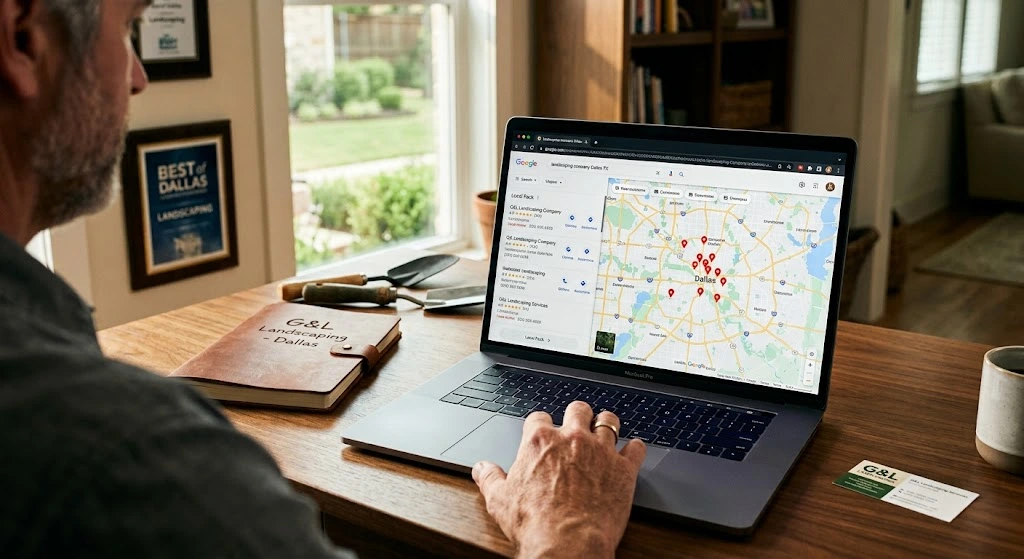
Google Business Profile Checklist
- Verify the profile.
- Confirm the business name and category.
- Review services and service areas.
- Check phone number, website, and hours.
- Review photographs and customer reviews.
Google says complete and accurate Business Profile information can help businesses appear in relevant local searches. Local results are mainly influenced by relevance, distance, and prominence.
Website Audit Checklist
- Important services have useful pages.
- Important pages have unique titles and H1s.
- Service and location pages can be indexed.
- Internal links work correctly.
- Important pages work well on mobile.
- Sitemap, robots.txt, and canonical settings are appropriate.
- Unnecessary duplicate pages are removed.
Complete this audit before publishing another batch of location pages. Otherwise, you may create additional URLs without addressing existing problems affecting important services, locations, or search visibility.
2. Build a Dallas Landscaping Keyword and Page Map
Start with the services customers actually purchase. Someone searching for lawn maintenance has different needs from someone looking for drainage, landscape design, sod installation, or outdoor living services.

Map each important search intent to the page that best satisfies it. This prevents multiple pages from competing for the same topic while ensuring customers reach the most relevant information.
| Search intent | Example search | Suitable page |
|---|---|---|
| Core service | lawn maintenance Dallas | Lawn maintenance service page |
| Service + location | landscape design Plano | Relevant service or location page |
| Customer problem | yard drainage Dallas | Drainage service or problem page |
| Landscaping service | hardscaping Dallas | Hardscaping service page |
| Informational | how often to water a Dallas lawn | Helpful guide |
Keyword Mapping Checklist
- Map important services to relevant pages.
- Include genuine Dallas-area searches.
- Research customer problems and questions.
- Consider seasonal landscaping topics.
- Avoid multiple pages targeting identical intent.
- Use natural keyword variations.
For example, lawn maintenance should lead to a useful lawn maintenance page. In contrast, drainage searches should return relevant drainage information rather than forcing every service onto a single generic landscaping page.
For a broader strategy, connect this work with your local SEO strategy for Dallas landscapers when discussing the wider process behind service, location, and customer-intent mapping.
Use “Near Me” Searches Naturally
You do not need to create a page called “landscaping near me.” Instead, clearly explain what the business does, where it operates, and which customers or properties its services are designed to help.
Google considers the searcher’s location when determining distance for local results. Your strategy should therefore support genuine local relevance rather than repeatedly inserting “near me” into website copy.
3. Optimize Your Google Business Profile
Your Google Business Profile should accurately reflect how the landscaping company operates today. The objective is to provide useful business information, not to add every possible keyword or unrelated service.
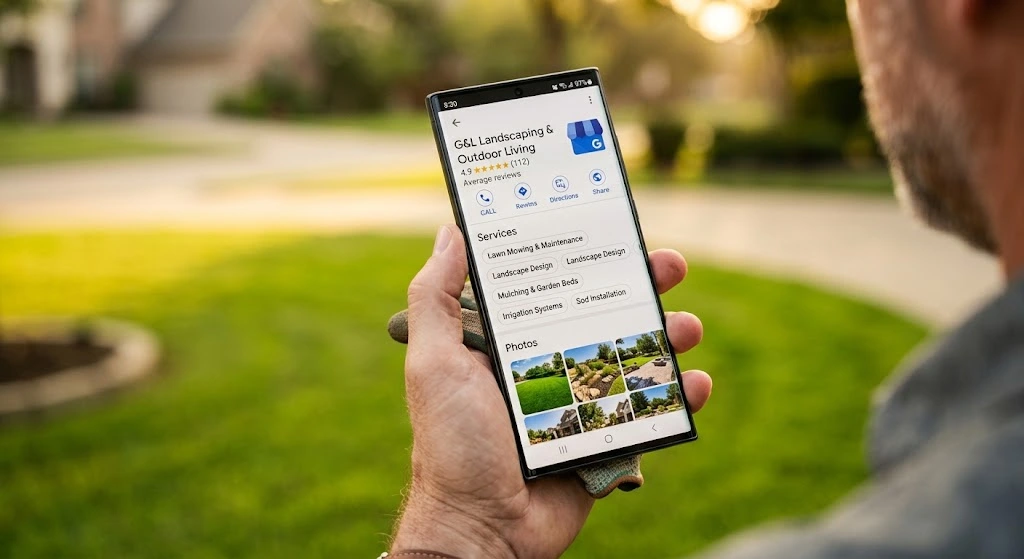
Make sure the primary category represents the core business, services reflect actual offerings, hours remain up to date, and contact information is accurate. Good Google Business Profile optimization should reflect the way the company actually operates.
Google Business Profile Checklist
- Use the most accurate primary category.
- Add relevant secondary categories when appropriate.
- List genuine landscaping services.
- Keep contact details and hours accurate.
- Maintain accurate service-area information.
- Add original business and project photographs.
- Monitor genuine customer reviews.
Avoid adding unrelated services because they contain valuable keywords. A landscaping company should describe what it actually provides rather than turning its Business Profile into a collection of search terms.
Keep Your Service Area Honest
A landscaping company may genuinely serve Dallas, Plano, Frisco, McKinney, Allen, Richardson, Garland, Irving, Carrollton, Lewisville, Flower Mound, Arlington, Grand Prairie, Mesquite, Rockwall, Rowlett, Wylie, Southlake, Coppell, Denton, Cedar Hill, DeSoto, Addison, or University Park.
That does not mean every location deserves its own page. Create location content when the business genuinely operates there and can provide useful information beyond simply replacing one city name with another.
Your website, Google Business Profile, and other legitimate business information should tell a consistent story about the company’s services and service coverage. Avoid creating artificial geographic signals.
4. Optimize Your Landscaping Service Pages
A landscaping website should make its important services easy to understand. Each valuable service page should explain what the company provides, which problems it solves, where it operates, and what customers can expect.
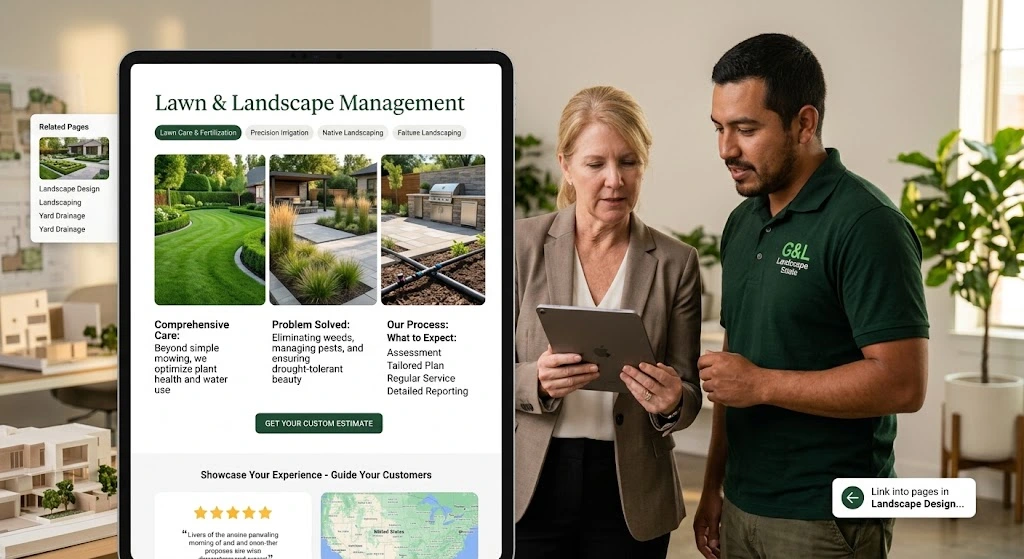
A strong service page answers practical questions before asking visitors to contact the company. It should also demonstrate relevant experience through projects, photographs, useful explanations, and related information.
Service Page Checklist
- Explain exactly what the service includes.
- Describe the customer problem it solves.
- Explain where the service is available.
- Include relevant project examples.
- Use original images where possible.
- Add useful FAQs.
- Link to related services and locations.
- Provide a clear estimate-request path.
Important landscaping services may include landscape design, lawn care, lawn maintenance, sod installation, hardscaping, irrigation, drainage, outdoor living, and yard cleanup.
Do not create separate pages for every minor variation of the same service. When closely related topics share the same search intent, one comprehensive page may serve customers better than several thin pages.
For example, a drainage page can explain common water-flow problems, available solutions, service coverage, relevant project experience, and related landscaping services, rather than providing only generic, keyword-focused copy.
5. Create Useful Dallas and DFW Location Pages
Location pages can explain genuine service coverage, but they should offer more than just a changed city name. Each page needs a clear reason to exist and useful information for people in that area.
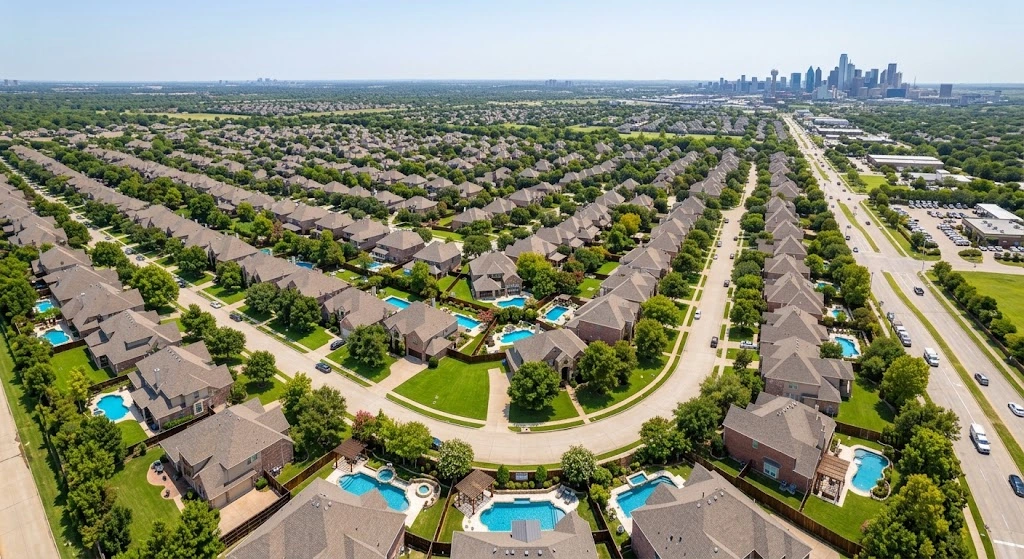
Create a location page when the company genuinely serves the area, there is meaningful demand, and the business can provide relevant services, projects, experience, or local information.
Location Page Checklist
- The company genuinely serves the location.
- The page has a clear purpose.
- Relevant services are available there.
- Useful local information can be provided.
- Relevant projects or experience exist.
- The content is meaningfully different from other locations.
Suppose the company completed a drainage project in Frisco. A useful Frisco page could discuss that service, the customer problem, relevant project experience, and how the company serves similar properties there.
A Plano page could instead feature a genuine sod installation or landscape design project completed in Plano. The local details should reflect actual business experience rather than a template.
This creates a useful relationship between business, service, location, customer problem, and project. That relationship is much more meaningful than publishing identical pages with different city names.
Avoid Thin City Pages
Do not publish 20 pages that say almost the same thing, only changing the suburb name. Such pages give visitors little reason to stay and provide limited, unique information.
Instead, prioritize locations where the company has genuine service coverage, relevant experience, useful project evidence, or enough local context to make the page genuinely helpful.
6. Use Real Landscaping Projects as Local SEO Assets
Landscaping companies have an advantage because completed projects provide visual evidence of real work. Use that evidence to strengthen service pages, location pages, case studies, and helpful guides.
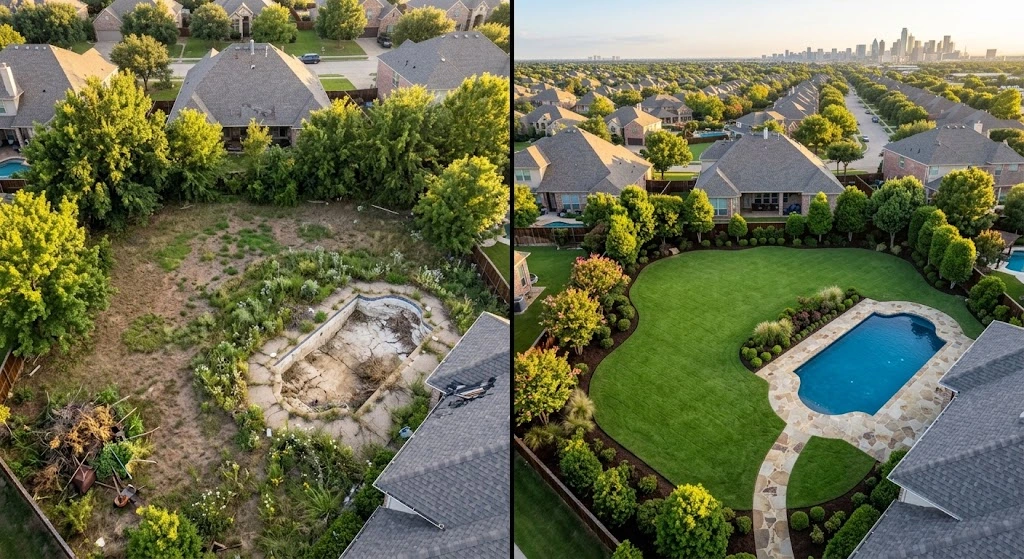
For important projects, record the location, customer problem, service performed, materials or methods used, before-and-after photographs, and the main result.
Project Content Checklist
- Location.
- Customer problem.
- Service performed.
- Materials or methods.
- Before photographs
- After photographs.
- Main project result.
- Relevant service page.
- Relevant location page.
For example, a Frisco drainage project could explain where water collected, what drainage work was completed, which methods were used, and what changed after the project.
That is more useful than another generic article explaining that drainage matters. Real project information gives customers a practical context while demonstrating that the company has experience performing the service.
A project does not always need its own long article. It can strengthen an existing service page, support a location page, serve as a short case study, or provide evidence in a broader landscaping guide.
Image Optimization Checklist
- Use original project photographs.
- Give files descriptive names.
- Write useful alt text.
- Add captions when they help.
- Compress large images.
- Connect important images with relevant content.
Real photographs also help potential customers understand the type of landscaping work the company actually performs and can make service and location pages more useful.
7. Build Reviews, Citations, and Local Authority
Landscaping customers trust a company with their homes and outdoor spaces, so local SEO should build the credibility they need before requesting an estimate.
Ask genuine customers for reviews after completing work, make the process simple, respond professionally to feedback, and avoid any practice designed to manufacture or manipulate customer ratings.
When negative feedback appears, responding to negative reviews professionally can show potential customers that the business takes concerns seriously and values customer feedback.
Google states that reviews are among the information associated with prominence in local search. The focus should remain on genuine customer experiences rather than artificial review activity.
Citation Checklist
Check important business information across relevant websites, including the business name, address where applicable, phone number, website, and business category.
Prioritize relevant and trustworthy sources rather than submitting the business to every directory available. Local references should make sense for the business and its actual presence.
Local Authority Checklist
Look for legitimate opportunities through Dallas-area organizations, local publications, home improvement websites, landscaping suppliers, trade associations, community organizations, builders, and complementary businesses.
The goal is to earn relevant mentions and links because the relationship makes sense. Do not pursue unrelated directory links simply to increase the number of referring domains.
8. Strengthen Internal Linking, Technical SEO, and Entity Signals
Good local content still needs a website that search engines can crawl, index, and understand. Technical SEO should support the important pages rather than become an isolated checklist disconnected from business priorities.

Technical SEO Checklist
- Check mobile usability.
- Improve important slow pages.
- Fix broken links.
- Review indexation.
- Check the XML sitemap.
- Review robots.txt.
- Check canonical URLs.
- Remove unnecessary duplicate pages.
- Make important pages easy to reach.
Prioritize technical fixes based on their impact on valuable pages. An indexing problem affecting a core drainage service deserves more attention than a minor issue on an unimportant page.
Internal Linking
Connect pages that genuinely belong together. For example, a Dallas drainage guide can link to the drainage service, which can connect to a relevant Frisco location page and then to a completed drainage project.
Another useful path could connect a landscape design guide with the landscape design service, a Plano location page, and a completed design project.
These relationships help visitors navigate the website while making it easier to understand the connections among business, service, location, customer problem, and project.
Structured Data
Use structured data when it accurately describes the page and business. Relevant types may include LocalBusiness, Organization, Service, and BreadcrumbList.
Google recommends using the most specific LocalBusiness subtype that fits the business and following its structured-data guidelines. Structured data can help search engines understand information, but it does not guarantee a particular search appearance.
Make sure structured data matches visible information, business details remain accurate, markup is validated, critical errors are fixed, and information is updated when the business changes.
9. Track Local Rankings and Landscaping Leads
A ranking report can show where a website appears, but rankings alone cannot tell you whether visitors become customers. A landscaping SEO campaign should measure search visibility alongside meaningful business actions.
Track important service keywords, Google Search Console clicks, impressions, service-page performance, location-page performance, and Google Maps visibility from relevant locations.

Local visibility can vary with the searcher’s location and context, so avoid treating a single ranking position as the complete picture of performance.
Lead Tracking Checklist
- Phone calls.
- Contact forms.
- Estimate requests.
- Consultation requests.
- Qualified landscaping leads.
- Leads by service.
- Leads by location.
Think about the full customer journey:
Search → relevant page → trust → inquiry → estimate
If traffic grows while qualified inquiries remain flat, review the page’s service match, trust signals, project evidence, contact process, and mobile experience.
The purpose of local SEO is not simply to generate more impressions. It is helping relevant customers find the business and take a useful next step.
10. Check These Dallas Landscaping SEO Mistakes
Use a final review before considering the campaign complete. The most important problems are usually related to accuracy, duplicate intent, weak local content, missing project evidence, technical issues, or measurement gaps.
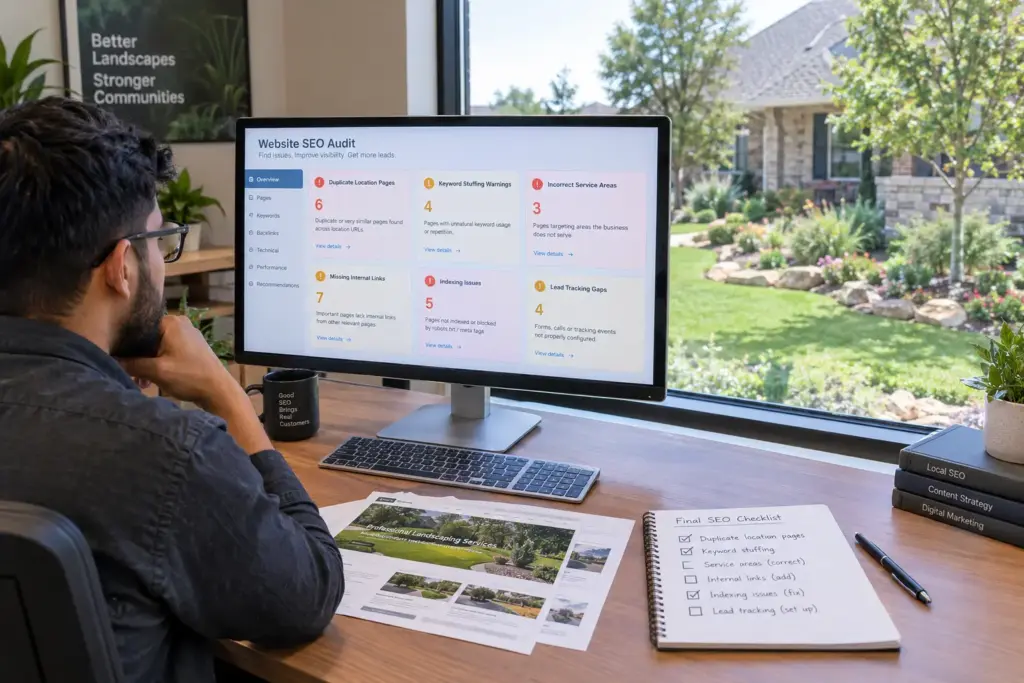
Final SEO Checklist
- No duplicate city pages created only by changing location names.
- No pages target areas the company does not genuinely serve.
- No keyword stuffing.
- No fake customer reviews.
- No misleading Business Profile information.
- No important service pages are isolated from the website.
- No major indexing or crawl problems.
- No campaign is measured only through rankings.
A common mistake is trying to cover every Dallas suburb before building strong pages for the services and locations that matter most to the business.
Build depth where the company has real experience first. Expand only when additional locations or services can support genuinely useful content.
How Should You Prioritize a Dallas Landscaping SEO Audit?
Start by confirming that the Google Business Profile, website, services, contact information, and service areas accurately represent the business. Accuracy creates the foundation for every later local SEO improvement.
Next, strengthen key service pages and ensure customers can understand what each service includes, which problems it solves, where it is available, and the evidence supporting the company’s experience.
Then evaluate location coverage. Create useful location pages only where the company genuinely operates and can provide relevant information, projects, services, or local experience that makes the page worthwhile.
After that, strengthen project evidence, reviews, relevant local mentions, internal links, and technical foundations. Finally, measure visibility alongside calls, estimate requests, consultations, and qualified landscaping leads.
This approach prevents a common problem: creating more pages while important existing pages, business information, or technical foundations still need attention.
Need Help With Local SEO for Your Dallas Landscaping Company?
If you have worked through this checklist and still cannot identify the biggest opportunities, a focused local SEO audit can help prioritize the work.
Dallas Landscaping SEO focuses on landscaping services, Dallas-area locations, Google Business Profile optimization, service pages, local content, technical SEO, and lead tracking.
The goal is not to change everything at once. Start by identifying the pages, local signals, and technical issues that deserve attention based on the business’s actual needs.
Conclusion
Local SEO works best when your website and Google Business Profile clearly represent the business that customers can actually hire. Accuracy, relevance, genuine local evidence, and useful pages should guide the strategy.
Start with accurate business information, then map important services to useful pages. Build location pages only where the company genuinely operates, and support them with real projects and relevant local information.
Connect related pages with internal links, maintain a healthy technical foundation, and earn genuine customer reviews and relevant local mentions. Then measure calls, estimates, qualified leads, and search visibility together.
For a Dallas landscaping company, local relevance comes from real details. A drainage project in Frisco or a landscape design project in Plano provides useful evidence that generic location copy cannot.
The strongest local SEO strategy is not about creating the most pages. It is about creating useful connections between the business, services, locations, customer problems, and completed work.
Work through the checklist in priority order, keep the information accurate, and update it whenever services, projects, business details, or service areas change.
Frequently Asked Questions
What is the most important part of local SEO for a Dallas landscaping company?
Start with an accurate Google Business Profile, clear service pages, genuine local proof, and a website explaining where and how the company serves customers. Google says local results mainly consider relevance, distance, and prominence.
How do I optimize a landscaping company’s Google Maps listing in Dallas?
Maintain the Business Profile, choose the most accurate category, provide complete information, list genuine services, maintain accurate service areas, add relevant photographs, and earn genuine customer reviews. Distance also affects local visibility.
Should a landscaping company create a page for every Dallas suburb?
No. Create a location page when the company genuinely serves that area and can provide useful, original information. A page that only changes the city name provides little additional value.
What keywords should a Dallas landscaping company target?
Start with actual services, locations, and customer problems. Examples include lawn maintenance, landscape design, irrigation, drainage, sod installation, and hardscaping combined with relevant Dallas-area searches.
Do Google reviews help local SEO?
Google states that reviews are among the information associated with prominence in local search. Reviews should reflect genuine customer experiences and comply with Google’s policies.
How can landscaping companies build local backlinks?
Build genuine relationships with relevant Dallas organizations, suppliers, local publications, trade groups, builders, community organizations, and complementary businesses. Focus on useful relationships rather than collecting unrelated links.
Does schema markup improve local rankings?
Structured data helps search engines understand information on a page and can support eligibility for certain search features. Google does not guarantee that structured data will produce a particular search appearance.
How long does local SEO take for a Dallas landscaping company?
There is no reliable fixed timeline. Progress depends on the existing website, Business Profile, competition, service coverage, local authority, content quality, technical condition, and ongoing work.
Measure progress through impressions, clicks, service-page visibility, Maps visibility, calls, estimate requests, and qualified leads instead of relying on one ranking position.
Dig Deeper: How to Get More Google Reviews for a Landscaping Business